The Importance of Food Freezing in Maintaining the Quality of Food Products
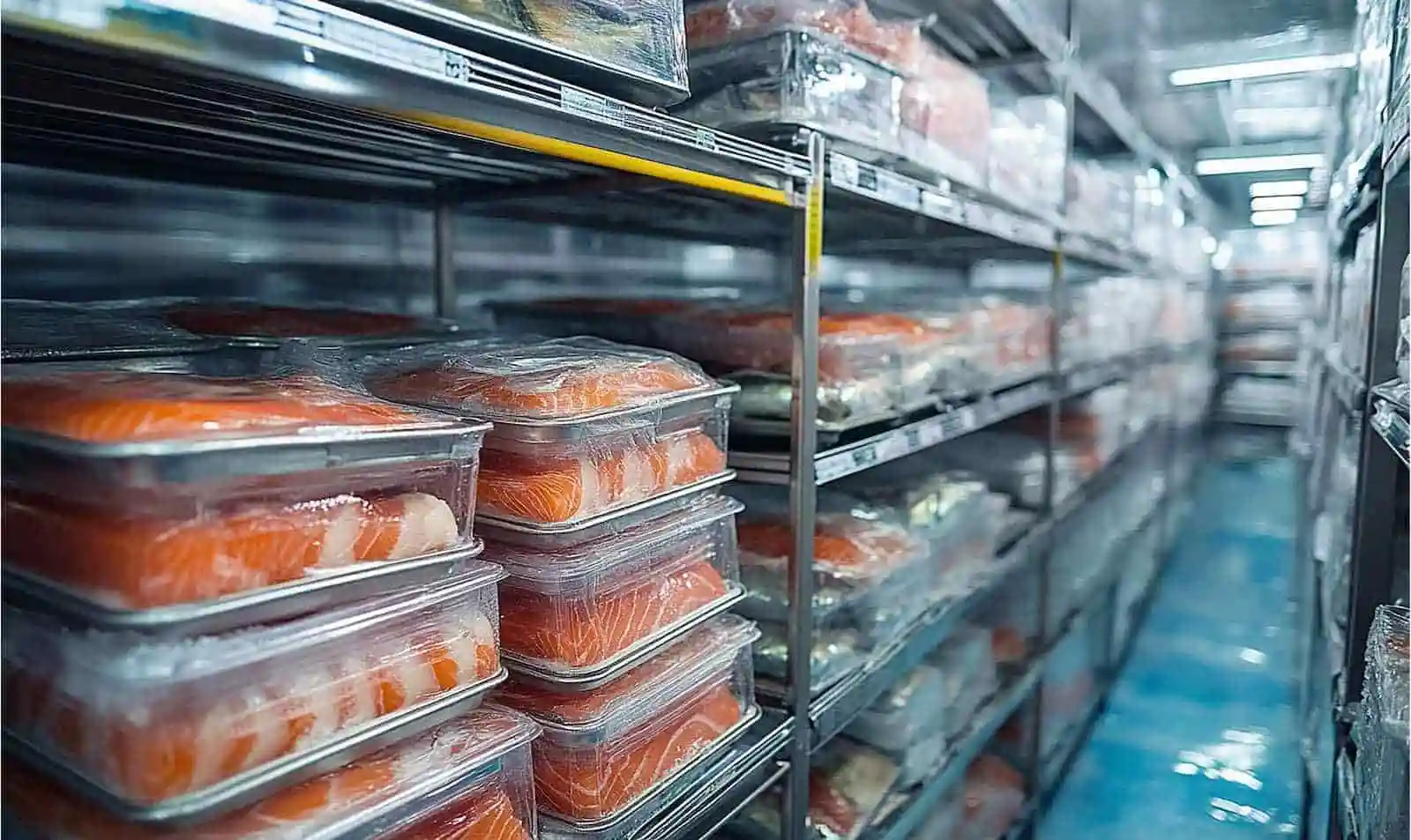
Food freezing is one of the most widely used methods for storing food products because it is practical and highly effective. This process is carried out by lowering the temperature below the freezing point to inhibit chemical and biochemical reactions, as well as the growth of spoilage-causing microorganisms.
In addition to preserving shelf life, this preservation method helps maintain the flavor, texture, and nutritional value of food ingredients. Various commercial commodities such as fruits, vegetables, processed meats, and ready-to-eat meals are now commonly found in frozen form.
Interestingly, freezing food industry standards are divided into two main types, namely quick freezing and slow freezing, each of which has its own characteristics and advantages. Understand the goals and types of food freezing more deeply so you can choose the most appropriate method for your business supply chain.
Read Also: The Role of Cold Storage for Dairy Products on an Industrial Scale
What Are the Main Goals of Food Freezing in the Cold Chain Logistics Industry?
The process of freezing food involves lowering the temperature of food ingredients below the freezing point so that some of the water inside turns into ice crystals. Here are the main goals of implementing this method:
1. Extended Shelf Life
This method allows food to be stored longer without spoiling quickly, even lasting up to years at freezer temperatures around -18°C.
2. Preserved Flavor
It helps maintain the original flavor during storage or shipping processes, especially through quick freezing technology that preserves the natural quality and freshness of the food.
Read Also : Frozen Food Distribution Permit: Criteria and How to Apply
3. Inhibiting Microbial Activity
It preserves products by suppressing microbial activity and slowing down chemical and enzymatic reactions that can damage nutritional content due to the reduced availability of free water.
4. Convenient Post-Processing
Frozen products are more practical for consumers to use directly without requiring extensive preparation, such as cleaning or seasoning.
5. Easier Storage and Shipment
Frozen food is more flexible to arrange inside freezers, allowing products to be distributed more efficiently for both local and international shipments.
Read Also: This is the Difference Between Air Blast Freezer & Cold Storage, Important!
The Food Freezing Process and Its Changes on Food Characteristics
The food freezing process begins when the product temperature reaches the initial freezing point, which is when ice crystals start to form. The temperature decline profile in food products differs from pure water due to the presence of dissolved solids that affect the freezing point.
Initially, the product undergoes supercooling, where the temperature can drop to about 10°C below the freezing point before water freezing actually occurs. As freezing progresses, most of the water in the product turns to ice, while the concentration of solids in the unfrozen portion increases.
This process stops when the solids reach a supersaturated state and begin to crystallize, releasing latent heat, until the temperature reaches the eutectic point. The proportion of water that remains unfrozen highly depends on the product type and storage temperature. For example, at -20°C, about 88% of water freezes in mutton and 91% in fish commodities.
Read Also: What Are Perishable Food Ingredients? Here Are the Definitions & Examples
Differences Between Freezing and Food Storage Methods
Generally, the concept of food freezing focuses on an active process to lower food temperatures below the freezing point so that the water within the food turns into ice crystals to stop biological activity.
Meanwhile, storage is a passive process to maintain the condition of already conditioned food (whether at room temperature, refrigerator, or freezer) so that its quality and safety remain stable for a certain duration. Thus, freezing is part of the preparation method before long-term storage is carried out.
Types of Food Freezing and Their Main Functions
In modern industry, food freezing methods are generally divided into two main types based on the speed of the temperature reduction process:
1. Slow Freezing
Slow freezing typically takes 3 to 72 hours at temperatures around -15°C to -30°C. This slow process results in the formation of large ice crystals within the product tissue. These large ice crystals have the potential to damage cell walls like needles, triggering a high loss of nutrient fluids (drip loss) when the product is thawed.
2. Quick Freezing
Quick freezing is carried out in a short time (less than 30 minutes) to pass through the maximum freezing zone. Because the temperature transition occurs instantly, the ice crystals formed are extremely small. This keeps the food cell structure intact, preserves flavor and nutrients, and suppresses microbial contamination maximally. This quick freezing has several technical variants, including:
Quick freezing: Direct immersion of food ingredients in a specialized cooling solution.
Rapid freezing: A freezing process with stricter control over cold air circulation and temperature.
Ultra rapid freezing: The fastest method (such as using liquid nitrogen) to maintain the total freshness of food texture.
Read Also: Shipping Frozen Food Out of Town is Easier with MGM Bosco
Support Your Freezing Food Business with MGM Bosco Logistics Cold Storage Facilities
Maintaining quality in the freezing food industry does not only depend on the freezing method itself, but also on the storage and distribution ecosystem. Managing frozen products in large volumes requires integrated professional handling to reduce the risk of drip loss and commodity damage.
MGM Bosco Logistics is here as a solution by providing Air Blast Freezer (ABF) facilities in Sidoarjo and Makassar to accelerate your business food freezing process before being transferred to the main warehouse area. Our cold storage facilities are supported by eco-friendly cooling technology and automatic digital temperature monitoring systems that are fully traceable through our customer portal.
Backed by more than 1,000 refrigerated truck fleets connected across 5 major transport hubs in Indonesian cities, alongside ISO 9001:2015, ISO 45001:2018, and Halal Indonesia certifications, we are ready to maintain your commodity safety standards. Contact MGM Bosco Logistics to optimize your business frozen product supply chain!
Read Also: F&B Business Tips and the Role of Cold Storage Within