Single-Axle Refrigerated Box Truck: Learn About Its Functions & Advantages
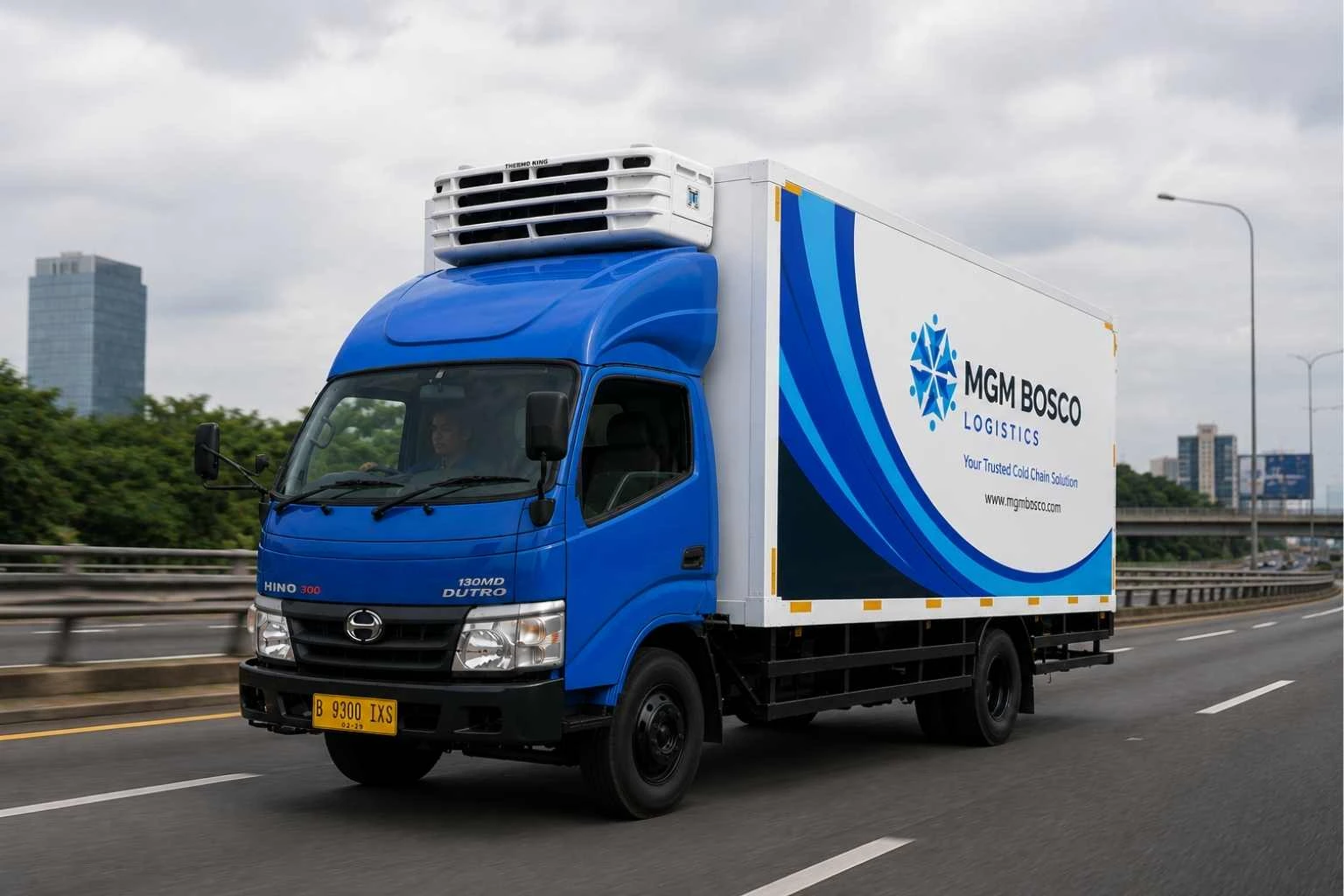
A single-axle box truck is one of the most commonly used light-duty trucks in the logistics and goods distribution industry.
With its smaller size compared to larger trucks, this cargo vehicle offers high flexibility to access congested urban areas and narrow roads.
This type of truck is also widely relied upon for transporting medium-sized loads, whether for retail, wholesale, or intercity distribution. Thanks to its fully enclosed box body, a single-axle box truck is able to maintain the safety and quality of goods throughout the delivery process.
Want to know the functions and advantages of a refrigerated single-axle box truck that make it so popular across various industries? Read the complete explanation in this article!
What Is a Refrigerated Single-Axle Box Truck?
A refrigerated single-axle box truck is a type of single-axle truck equipped with an enclosed box body and an integrated refrigeration system. This truck has four wheels with a single rear axle and is used to transport medium-sized loads.
Unlike dual-axle trucks, such as tronton trucks, single-axle trucks have a slimmer design, making them easier to maneuver through various road conditions and suitable for both urban and intercity distribution.
This type of truck is commonly used to transport goods that require controlled temperatures, such as frozen food, fresh agricultural products, fish, meat, as well as pharmaceutical products and medicines.
The refrigeration system ensures that the temperature remains stable throughout the journey, preserving product quality and shelf life from the warehouse to the end consumer.
Thanks to these capabilities, refrigerated single-axle box trucks have become the preferred choice for businesses in the FMCG, retail, and logistics industries operating within the cold chain supply sector.
Read also: What Is Refrigerated Truck Rental For? Here's Why It Is Important for Business
Functions of a Refrigerated Single-Axle Box Truck
A refrigerated single-axle box truck functions to maintain the stable temperature of temperature-sensitive goods throughout the distribution process. This vehicle is designed to transport products that require controlled temperatures, such as fresh food, frozen food products, beverages, and pharmaceutical products.
With a refrigeration system capable of reaching temperatures as low as -25°C, this truck helps maintain product quality and freshness during long-distance transportation.
In addition, the enclosed box body protects the cargo from weather, dust, sunlight, and potential theft. Stable temperatures also help extend the shelf life of products.
Furthermore, the use of refrigerated single-axle box trucks supports compliance with food and drug regulatory requirements while ensuring the cold chain remains intact from the warehouse to the end consumer.
Refrigerated Single-Axle Box Truck Capacity
Refrigerated single-axle box trucks are available in various capacities to meet different delivery requirements. The categories are as follows:
Small single-axle truck (mini single axle): Capable of carrying approximately 1.5–2 tons. Its compact size makes it ideal for urban deliveries or areas with narrow roads.
Medium single-axle truck: Has a capacity of approximately 2–3.5 tons, making it suitable for intercity distribution with medium-sized loads.
Large single-axle truck: Can carry up to 4–5 tons with a longer and stronger cargo box, making it commonly used for transporting larger quantities while still requiring a relatively compact vehicle.
MGM Bosco Logistics also provides a wide range of refrigerated single-axle box trucks with various capacities, including L300 (1 ton), CDE (2 tons), CDE Long (3 tons), and JP Jumbo (12 tons).
This variety of fleet options allows customers to choose the truck capacity that best suits their shipping requirements, whether for small-scale or medium-scale distribution while maintaining optimal refrigeration performance.
Difference Between Standard and Double Refrigerated Single-Axle Box Trucks
The main difference between standard and double single-axle box trucks lies in the number of wheels and their load capacity. A standard single-axle truck, or Colt Diesel Engkel (CDE), has four tires with a carrying capacity of up to 2 tons, while a Colt Diesel Double (CDD) truck has six tires and can carry 4–6 tons of cargo.
Single-axle trucks are more suitable for urban deliveries due to their compact size and ability to navigate narrow roads. Meanwhile, CDD trucks are more suitable for long-distance transportation or for carrying larger and heavier cargo.
The choice between the two depends on distribution requirements, cargo capacity, and the delivery route.
Read also: Cross Docking: Definition, How It Works, Types, & Advantages
Advantages of Refrigerated Single-Axle Box Trucks
Refrigerated single-axle box trucks offer several advantages that make them a preferred choice for businesses across various industries. Here are some of their key benefits:
Complete specifications and modern features: Designed to carry loads of 1.5–5 tons and equipped with features such as ABS brakes, heavy-duty suspension, digital dashboard, comfortable cabin, air conditioning, and manual or automatic transmission options that support safety and performance.
Reliable in various conditions: Suitable for intercity transportation on paved roads or roads with normal conditions. Its powerful engine is designed for long-term use, making it ideal for the logistics, food, and agricultural sectors.
Fuel-efficient and easy to maneuver: Fuel consumption is more efficient than larger trucks. Its compact size allows drivers to maneuver easily on narrow roads, in urban areas, or in heavy traffic.
Cost-effective operation: Maintenance, taxes, and fuel consumption are more economical, making refrigerated single-axle box trucks an ideal choice for SMEs as well as logistics businesses with daily distribution needs.
Maximize Large-Scale Deliveries with Refrigerated Trucks from MGM Bosco
To ensure the cold chain runs smoothly from storage to distribution, MGM Bosco Logistics serves as an integrated logistics solution for various frozen food businesses, including ice cream, processed meat, and dairy products.
With more than 20 years of experience, MGM Bosco provides end-to-end cold chain services, ranging from cold storage and refrigerated truck fleets to 3PL (Third-Party Logistics) services covering transportation, distribution, and real-time temperature and truck location reporting through the customer portal.
Supported by more than 1,000 refrigerated trucks equipped with GPS and thermo-loggers, MGM Bosco ensures that every product remains at its optimal temperature throughout the delivery process.
The fleet also offers various capacities ranging from 1 ton to 18 tons, including units such as the L300, CDE, CDE Long, JP Jumbo, and others, allowing customers to choose the most suitable vehicle for both small-scale and large-scale deliveries.
In addition, MGM Bosco Logistics operates four main warehouses located in Bekasi, Sidoarjo, Makassar, and Palembang, complete with Warehouse Management System (WMS) and Transportation Management System (TMS) for real-time temperature and inventory monitoring.
All processes are supervised by a 24/7 monitoring team, ensuring deliveries remain safe, efficient, and compliant with established standards.
As a company certified with ISO 9001:2015, ISO 45001:2018, and Halal Indonesia certifications, MGM Bosco Logistics is committed to maintaining quality, safety, and efficiency at every stage of its operations.
With environmentally friendly technologies such as solar panels and a CO₂-based refrigeration system, MGM Bosco Logistics also contributes to sustainable logistics practices.
So, what are you waiting for? Contact us and entrust your frozen food and temperature-sensitive product transportation needs to MGM Bosco Logistics.
Read also: 7 Important Roles of Cold Storage Companies in Indonesia & Their Challenges