Frozen Food Distribution Permit: Criteria and How to Apply
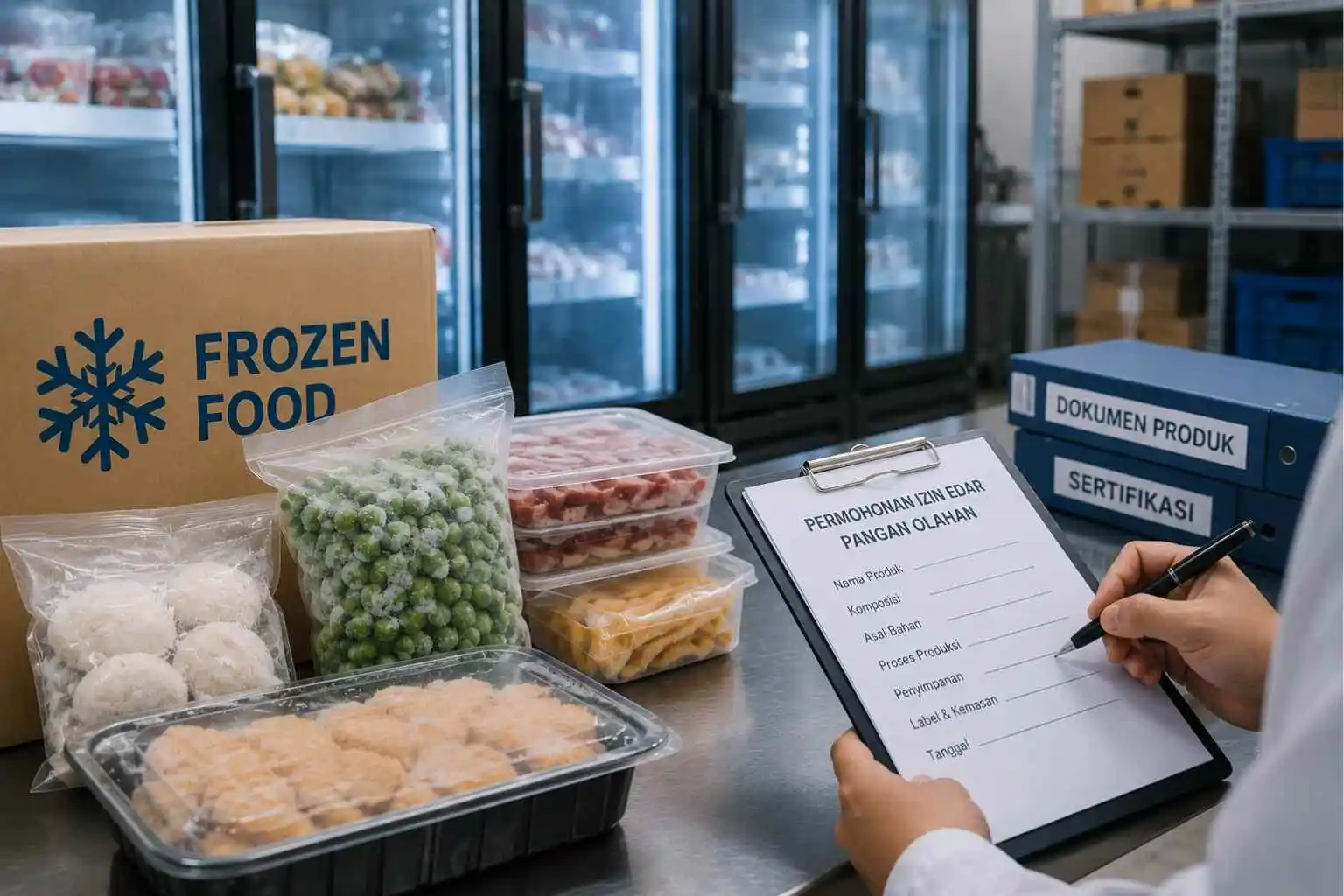
The frozen food business has become increasingly popular because it is practical and offers a long shelf life. However, many business owners are still confused about frozen food distribution permits.
So, do all frozen food products actually require one? In fact, this permit is important to ensure the safety of frozen food products while also ensuring that the business operates in compliance with applicable regulations.
The fact is, not all frozen food products are required to have a distribution permit, as there are specific criteria that must be met, including those for home-based businesses. To avoid mistakes and the risk of penalties, let's understand the criteria and the proper application process.
The Importance of a Frozen Food Distribution Permit
Frozen food refers to processed food products that are manufactured through a freezing process and must be maintained at a minimum temperature of -18°C during storage and distribution. This method effectively extends shelf life by inhibiting microbial growth as well as enzymatic and chemical reactions, thereby preserving product quality. Therefore, its distribution must comply with the standards of Good Processed Food Distribution Practices (CPerPOB).
According to the regulations, processed food produced domestically or imported for retail sale in packaged form must have a distribution permit as proof of compliance with applicable regulations. However, there are several exceptions, such as products with a shelf life of less than 7 days, raw materials that are not sold directly to consumers, products packaged directly in front of the customer upon request, and ready-to-eat foods.
For frozen food, products with a shelf life of 7 days or more and produced on a mass scale must obtain a distribution permit from BPOM. Meanwhile, certain types of home-scale businesses may obtain permits through the P-IRT certification issued by the local government. By understanding these regulations, business owners can operate more safely while ensuring their products remain high quality until they reach consumers.
Frozen Food Quality Begins with Precise Cold Storage
Every licensed frozen food product must maintain its quality at scale. To support your production and distribution needs, MGM Bosco offers cold storage rental services tailored to your operations. Explore our services to find the right fit for your business!
Cold Storage for Frozen Food →Frozen Food Criteria That Require a Distribution Permit
In accordance with Law No. 18 of 2012 and Government Regulation No. 86 of 2019, processed foods, including frozen food, are required to have a distribution permit because they are produced and distributed under specific conditions (minimum -18°C). The following are the criteria for frozen food products that must obtain a BPOM distribution permit:
Products with added nutrients (fortification), such as food for pregnant women, infants, or products with vitamin/mineral claims.
Products required to comply with Indonesian National Standards (SNI), such as bottled drinking water, sugar, flour, and canned fish.
Products included in government programs.
Products intended for market testing.
Products containing food additives (BTP).
In addition, the type of distribution permit depends on the scale and type of business, including:
SP (Counseling Certificate): For micro and small businesses registered with the local Health Office.
SPP-IRT (PIRT): For processed food products with a shelf life of more than 7 days.
MD: For domestically produced products from medium and large-scale businesses submitted to BPOM.
ML: For imported products that have complied with BPOM requirements.
Several categories of processed food products are also eligible for PIRT certification, including processed meat, fish, flour-based products, seasonings, beverages, and snacks made from fruits and tubers.
Read also: The Best Food Storage Temperature for Every Type of Food
Frozen Food Criteria That Do Not Require a Distribution Permit
Based on BPOM Regulation No. 23 of 2023, the following frozen food products are not required to have a distribution permit:
Products with a shelf life of less than 7 days.
Products used as raw materials and not sold directly to consumers.
Products (excluding food additives) packaged directly in front of the customer upon request.
Products from home industries in accordance with applicable regulations.
Imported products in small quantities for samples, research, or personal consumption.
Ready-to-eat foods.
Unprocessed foods that can be consumed directly or used as raw materials.
In simple terms, frozen food products with a shelf life of approximately 5–6 days are not required to have a distribution permit and may be marketed directly. This shelf life is calculated from the time the product is manufactured and stored under frozen conditions.
How to Obtain a Frozen Food Distribution Permit
To ensure your frozen food business operates safely and in compliance with regulations, there are several important steps that must be completed. This process helps ensure your business is legally established while meeting food safety standards.
1. Register for a Business Identification Number (NIB) Through OSS
The first step is to register for a Business Identification Number (NIB) through the OSS system at oss.go.id. The NIB serves as the official identity of your business. Before registering, prepare your National ID Card (KTP) and Taxpayer Identification Number (NPWP) as the primary requirements.
2. Apply for a BPOM Distribution Permit
After obtaining an NIB, proceed with applying for a distribution permit through BPOM at ereg-rba.pom.go.id. This process is also part of obtaining BPOM approval for food products, including creating an account (access rights) and completing the product registration form.
3. Apply for an SPP-IRT Certificate
Although frozen food stored under frozen conditions is not categorized under SPP-IRT, it is still important to understand this process. The SPP-IRT certificate is issued by the local Health Office as proof that the product complies with food safety standards.
4. Obtain a Regional Business License
Finally, apply for a business license through the local Department of Industry and Trade so your business can legally operate within the region. By following these steps, your frozen food business can operate in a more organized, secure, and compliant manner.
Read also: Learn the Difference Between Cold Storage and a Regular Freezer!
Penalties for Not Having a Frozen Food Distribution Permit
Not having a distribution permit is not merely an administrative violation but may also result in legal penalties. Based on Article 142 of Law No. 18 of 2012, as amended by Law No. 6 of 2023, frozen food businesses operating without a distribution permit may face:
Imprisonment for up to 2 years.
A maximum fine of IDR 4 billion.
For businesses categorized as low to medium risk, the penalties are generally administrative, including:
Fines.
Temporary suspension of production or distribution activities.
Product recalls.
Compensation.
Revocation of business licenses.
Entrust Your Frozen Food Cold Storage Needs to MGM Bosco
Ensuring your products have the required distribution permit is an important step toward operating a safe and compliant frozen food business. However, maintaining product quality after production is equally important, especially in terms of storage and distribution under controlled temperatures.
MGM Bosco Logistics provides a solution through high-standard cold storage services equipped with real-time temperature monitoring systems. The storage process is supported by modern technology and integrated management systems, ensuring product quality is maintained from the warehouse through the distribution process.
In addition, MGM Bosco is supported by a fleet of refrigerated trucks equipped with tracking systems and well-organized proof-of-delivery documentation, allowing every logistics process to be monitored easily and transparently.
If you want to ensure your frozen food products remain safe while meeting proper distribution standards, MGM Bosco is ready to become your trusted logistics partner. Contact us today to find the best frozen food storage solution for your business needs!
Read also: Air Blast Freezer vs. Cold Storage: Here's the Difference You Need to Know